
Many drivers underestimate the risks associated with state minimum coverage limits, assuming they're adequately protected. However, this common belief can expose you to substantial financial burdens in the event of an accident. Moreover, the term "full coverage" can be misleading, as it doesn't guarantee thorough protection. Understanding these misconceptions is vital for making informed decisions about your auto insurance. What else might you be overlooking when it comes to your policy?
Key Takeaways
- Many drivers mistakenly believe that state minimum coverage is sufficient, which often leaves them financially vulnerable in an accident.
- Full coverage does not mean complete protection; it's a mix of different policies and excludes intentional damage or racing activities.
- Owner's insurance typically follows the vehicle, not the driver, which can lead to gaps in coverage when others are driving the car.
- Relying on minimum coverage limits can result in personal liability for costs exceeding policy limits, especially in severe accidents.
- Understanding the details of your policy, including limits and exclusions, is crucial for adequate financial protection during accidents.
Minimum Coverage Limits Are Often Insufficient
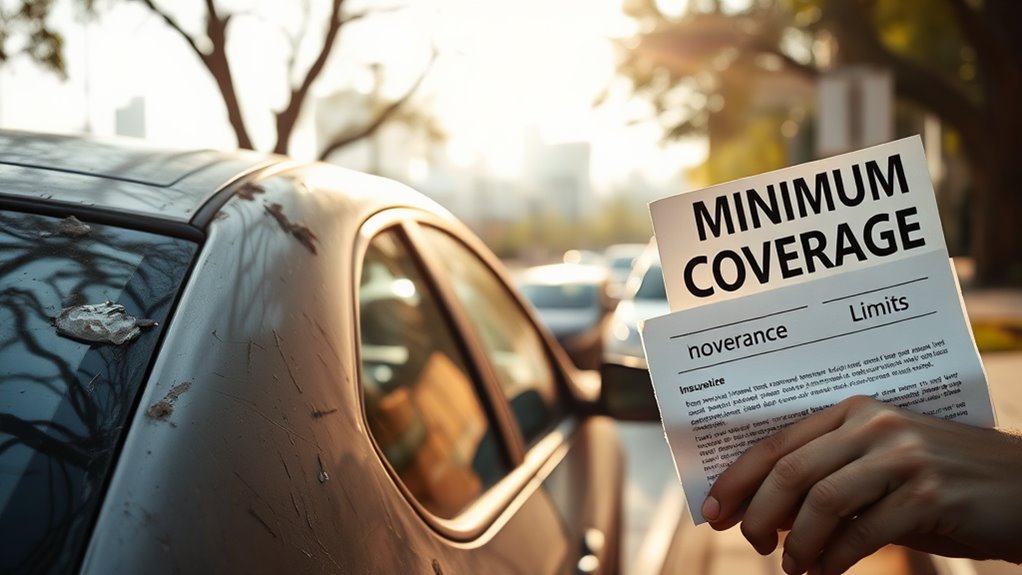
While many drivers believe that meeting their state's minimum coverage limits is sufficient, these basic policies often fall short in providing adequate financial protection. State minimums vary widely, with bodily injury coverage typically set at $25,000 per person and $50,000 per accident, alongside property damage limits ranging from $10,000 to $25,000. In severe accidents, these limits can quickly be exceeded, leaving you personally liable for the additional costs. This financial strain can be overwhelming, especially when faced with high medical bills or extensive property damage. Experts recommend increasing liability coverage to safeguard against potential lawsuits and significant claims. By doing so, you mitigate your financial risks and guarantee better protection for yourself and your assets, ensuring that your total bodily injury limit exceeds your net worth. Additionally, exploring affordable car insurance options can help you find better coverage that fits your budget.
Full Coverage Does Not Cover Everything
Many drivers mistakenly believe that full coverage auto insurance offers complete protection against all risks.
In reality, full coverage is a combination of different policies and doesn't cover everything you might assume. Here are three common exclusions:
- Intentional Damage: If you damage your vehicle on purpose, you won't be covered.
- Street Racing: Engaging in illegal activities like street racing usually voids your coverage.
- Business Use: If you use your vehicle for business purposes, like deliveries, you may not be protected.
Understanding the limits and exclusions of your policy is essential.
Review your coverage regularly, and consult your insurance agent to avoid surprises and guarantee you have the protection you need.
Owner's Insurance Typically Covers Accidents
When you're involved in an accident, it's important to understand how your auto insurance policy functions, especially regarding coverage for damages and injuries.
Owner's insurance typically follows the vehicle, not the driver, which means your policy may not cover you if someone else is driving your car. Liability coverage is fundamental for protecting against legal claims if you're at fault, while Personal Injury Protection (PIP) can help with your medical expenses regardless of fault.
Additionally, collision coverage addresses damages from accidents, even single-vehicle incidents.
It's significant to know your policy details, as state minimums often provide inadequate protection. Understanding these aspects guarantees you're financially covered when accidents occur, making informed choices about your insurance important.
Conclusion
In the world of auto insurance, believing in these common myths can lead you down a precarious path. Underestimating the need for adequate coverage or assuming "full coverage" is a safety net might expose you to unexpected financial burdens. Remember, it's not just a policy—it's your peace of mind on the road. By understanding the nuances of your insurance, you can steer clear of potential pitfalls and guarantee you're truly protected when it matters most.