
While higher policy limits can enhance your financial security, they also come with increased premiums. Understanding how these limits affect your car insurance costs is vital for making informed choices. From covering medical expenses to potential legal fees, each element plays a role in your overall coverage strategy. What factors should you consider to strike the right balance between affordability and adequate protection? The answers may surprise you.
Key Takeaways
- Higher policy limits can lead to increased premiums, balancing protection against budget constraints is essential for cost management.
- Adequate coverage limits prevent financial exposure from accidents, ensuring sufficient protection for personal assets and reducing risk of bankruptcy.
- Enhanced liability limits provide better legal defense coverage, mitigating unexpected expenses from lawsuits that exceed policy limits.
- Rising repair costs and advanced vehicle technology necessitate strategic coverage limits to effectively manage vehicle repair expenses.
- Regularly reviewing and adjusting policy limits based on personal risk can optimize coverage while potentially lowering overall insurance costs.
Increased Premiums With Higher Limits

When you choose higher policy limits for your car insurance, you're likely to see increased premiums as a direct consequence.
Opting for higher car insurance limits typically results in increased premiums that reflect the added financial risk.
Regulatory changes, such as California's 2025 updates, illustrate how state mandates can raise premiums by necessitating higher coverage. Insurance companies adjust their rates according to the financial risk associated with increased liability limits.
While opting for higher limits may enhance your financial security, it inevitably leads to higher costs. Economic factors, including inflation and rising repair costs, further compound these premium increases.
Additionally, market dynamics can influence how insurers set their rates, particularly in response to competitive pressures and potential litigation trends. Many individuals seek out affordable car insurance options to help mitigate these rising costs.
Balancing extensive coverage with budget constraints becomes essential to managing these premium hikes effectively.
Enhanced Financial Protection Against Lawsuits
Opting for higher policy limits in car insurance greatly enhances financial protection against lawsuits, as it directly addresses the potential costs associated with legal defenses and judgments.
This decision can safeguard your financial resources in several ways:
- Covers legal defense costs, sparing you from unexpected expenses
- Protects against judgments that exceed your policy limits, shielding your assets
- Guarantees compensation for damages without depleting personal savings
- Prevents financial ruin in case of litigation or hefty judgments
- Boosts consumer confidence with perceived greater financial security
Rising Medical Expense Coverage Needs
As the landscape of healthcare continues to evolve, the need for adequate medical expense coverage in car insurance becomes increasingly apparent.
Medical payments coverage can considerably help in managing medical expenses after an accident, regardless of fault. It typically covers doctor visits, surgeries, and ambulance fees for both you and your passengers.
However, higher coverage limits can increase your policy costs, with limits usually ranging from $1,000 to $10,000. Rising healthcare costs and economic instability amplify the necessity for this coverage, especially when gaps in health insurance exist.
Evaluating your health insurance and choosing a medpay limit that aligns with potential out-of-pocket costs can provide essential financial protection in an increasingly unpredictable medical landscape.
Covering Vehicle Repair Costs Effectively

Covering vehicle repair costs effectively requires a strategic approach to insurance policy limits, especially given the increasing complexity and expense of modern vehicle repairs.
As vehicles become more advanced, understanding how to navigate these costs is essential.
- Complex technology: Advanced Driver Assistance Systems (ADAS) add layers of difficulty.
- Expensive parts: Shortages lead to inflated repair costs.
- Labor shortages: Skilled technicians are in high demand.
- Vehicle value: Higher value cars translate to pricier repairs.
- OEM parts: Using original parts can considerably increase expenses.
Legal Fees and Higher Policy Limits
Managing the costs associated with vehicle repairs is only part of the insurance puzzle; legal fees can greatly impact your overall coverage and costs. When legal fees are inside the policy limits, they can quickly deplete available funds, leaving you vulnerable.
Opting for higher policy limits may initially raise your premiums, but the difference is often minimal—sometimes less than $50 annually in business contexts. This increased limit can offer additional protection against high legal costs that exceed your policy.
Keep in mind, some insurers cover legal fees outside policy limits, which can further safeguard your coverage. If necessary, consider umbrella policies for added financial security against unforeseen legal expenses, ensuring your assets remain protected.
Understanding Liability Limits Structure
Understanding the structure of liability limits is essential for anyone looking to navigate the complexities of car insurance. These limits define how much your insurance will pay in the event of an accident, influencing both your coverage and costs.
- Bodily Injury Limit per Person: Maximum payout for injuries to one individual.
- Bodily Injury Limit per Accident: Total payout for injuries in a single event.
- Property Damage Limit: Covers repair or replacement of damaged property.
- Combined Single Limit (CSL): Offers flexibility for bodily injury and property damage coverage.
- Coverage Beyond State Minimums: Provides additional financial protection for unforeseen expenses.
Understanding these components helps you choose appropriate coverage and avoid potential financial exposure from accidents.
State Minimums and Their Impact on Costs
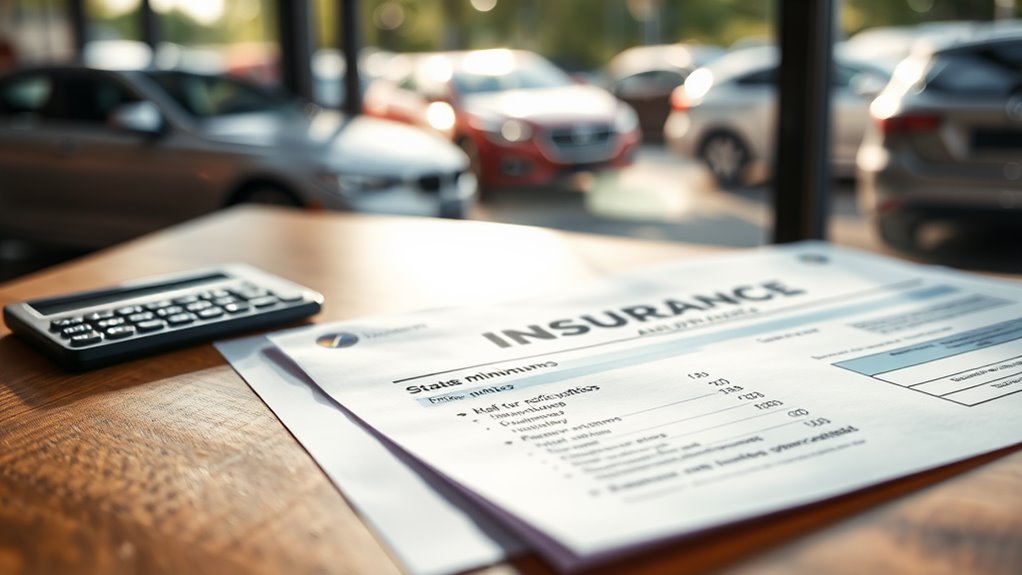
State minimum insurance requirements play an essential role in determining your car insurance costs and coverage. These requirements generally include only liability insurance, which covers injuries and property damage to others if you're at fault.
The costs associated with minimum coverage vary considerably by state due to differing regulations and risk factors. For instance, in states with higher accident rates, premiums can increase.
Minimum coverage costs differ significantly by state, influenced by regulations and varying accident rates.
While raising liability limits above state minimums may only cause minor premium increases, relying solely on minimum coverage can leave you financially exposed if accident costs exceed limits.
Additionally, changes in state laws, like California's upcoming increase in minimum limits, can impact your premiums, necessitating adjustments for existing policies.
Customization of Policy Limits for Personal Needs
While state minimum coverage provides a baseline for protection, customizing your policy limits allows you to tailor your car insurance to fit your personal needs and financial situation.
By adjusting your coverage, you can strike a balance between affordability and adequate protection. Consider the following options:
- Liability limits that reflect your financial assets.
- Optional add-ons like roadside assistance for peace of mind.
- Higher deductibles to lower your monthly premium.
- Medical payment options for personal injury protection.
- Bundling policies for potential discounts.
Customizing your policy not only meets your specific requirements but also enhances your financial security.
Evaluate your preferences and risk tolerance to create an ideal coverage plan that aligns with your lifestyle.
Factors Influencing Policy Limits Selection
How do various factors shape your choice of policy limits when selecting car insurance?
State mandates play an essential role, as they dictate minimum coverage requirements, impacting your premiums. Liability coverage is often required to safeguard both drivers and third parties.
In addition, local economic conditions influence your choices; higher coverage limits may protect you from substantial financial risks, yet they come with increased costs. Your demographic factors, such as age and income, also affect affordability.
Furthermore, insurance companies assess risk using actuarial data, adjusting their offerings accordingly. Understanding these factors helps you make informed decisions regarding policy limits, ensuring you comply with regulations while optimizing your coverage and costs.
Assessing Personal Risk for Optimal Coverage
Understanding your personal risk is essential when selecting ideal coverage for your car insurance. By evaluating various factors, you can avoid potential vulnerabilities in your financial safety net.
Consider the following:
- Your asset values, including real estate and savings, should guide your liability limits.
- A clean driving record can greatly lower your premiums.
- The geographic area you live in may impact your risk evaluation and rates.
- Credit scores can influence your insurance costs, especially in some states.
- Higher coverage limits, like $250,000 to $500,000, offer more protection and peace of mind.
Conclusion
In summary, selecting the right policy limits is essential for balancing costs and protection. For instance, if you choose a higher limit of $500,000 to safeguard your assets, your premium might rise. However, this decision shields you from potential lawsuits that could exceed that amount. By carefully evaluating your personal risks and financial situation, you can tailor your coverage to guarantee you're adequately protected without overextending your budget, ultimately leading to both security and peace of mind.